
easyDNS in 2014: The new TLDs are mostly cash grabs.
easyDNS in 2026: We’ve applied for three new TLDs.
What changed?
In the intervening years, much has happened in the naming space – from blockchain based roots like Ethereum Name Service (ENS), to Decentralized ID and most recently, we’re seeing the early signs of a micropayments protocol finally emerging for the internet, and x402 signalling via TXT records looks to be a part of that.
Agentic computing is already happening, and it’s creating demand for identity, discovery, payments and attestations simultaneously.
I’ve remarked via other writings about my epiphany nearly two years ago that in the future, more of our customers would be agents than humans. Granted, a lot of those agents would be acting on behalf of human operators, but it took about another year before the ramifications of anticipating that shift began to seep out into the world:
MCP, A2A, attestations, DIDs and a lot of it being boottrapped via metadata transmitted over the DNS.
I’ve posted a bare bones protocol spec for something I called Intelligence-over-DNS which I’m about to revamp as Agentic Signalling and Deployment Framework a.k.a ASDF 😉 Not to mention an ongoing collaboration with Elliot Noss on Groundmark (it was my IETF draft proposal for x402 signalling data that got Elliot to reach out to me “We’re working on the same thing!”).
What is playing out now, in agentic computing and identity is the same tension between decentralized and open source vs centralized walled garden that has practically defined the evolution of the Internet (the shorthand for this is “protocols vs platforms”).
In my mind, the 2014 expansion round was largely a manifestation of the latter: these new TLDs would define categories, and the customers were expected to sort themselves into verticals other people claimed: .red .blue .gay .art – many of these were ostensibly flags in the ground staking out identity and culture, but for all the marketing differentiation, there was little technological distinction between a domain registered under .com and one registered under .lol.
We started to see hints of this changing, when the .XYZ registry enabled ENS linking to the Ethereum blockchain. Now something was happening. Actual innovation, and naturally, easyDNS was the first registrar to support ENS linking for XYZ – and later for most other TLDs.
I believe we’re approaching a point where autonomous software agents will outnumber human users of internet infrastructure, possibly by orders of magnitude. We’re going to see a Cambrian explosion of innovation – and that should happen right down to the base layer of the dialtone of the internet: the DNS system.
At the risk of talking my book, when I said that in the future DNS will increasingly be used to publish metadata and not just IP-to-hostname translation, the future is now here – and we look forward to launching these three new TLDs which will be optimized for it.
In 2014, I thought the industry was creating new names for things that didn’t need them.
In 2026, I think we have an opportunity to create new things that actually need names.
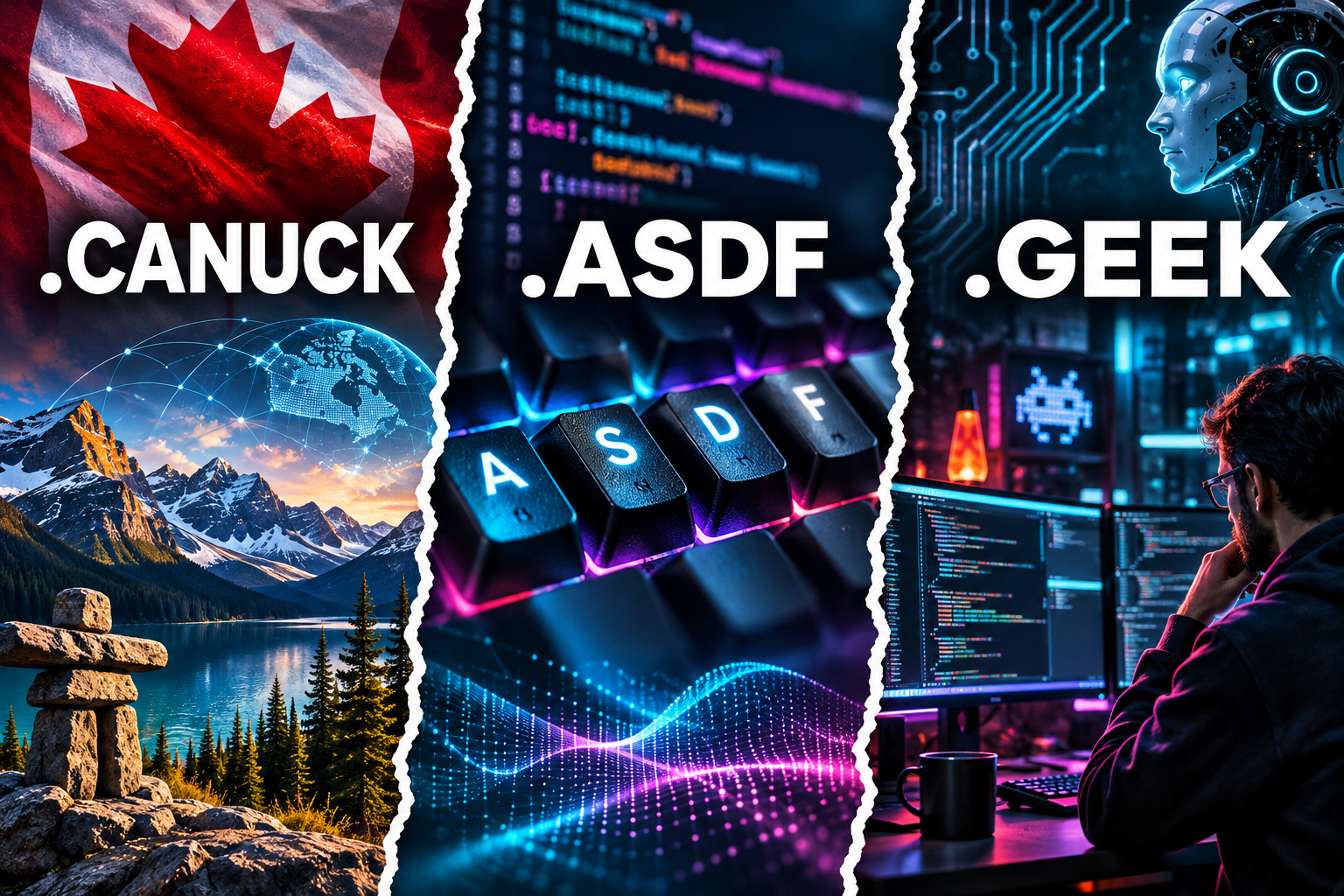
That’s why easyDNS is leading an investor consortium pursuing three new top-level domains in ICANN’s 2026 round: .CANUCK, .ASDF and .GEEK. Each will have its own identity and commercial model, but all three will share an underlying commitment to open protocols, interoperability and innovation at the DNS layer.
(For the corporate-speak version of this article, see our press release here).


Leave a Reply